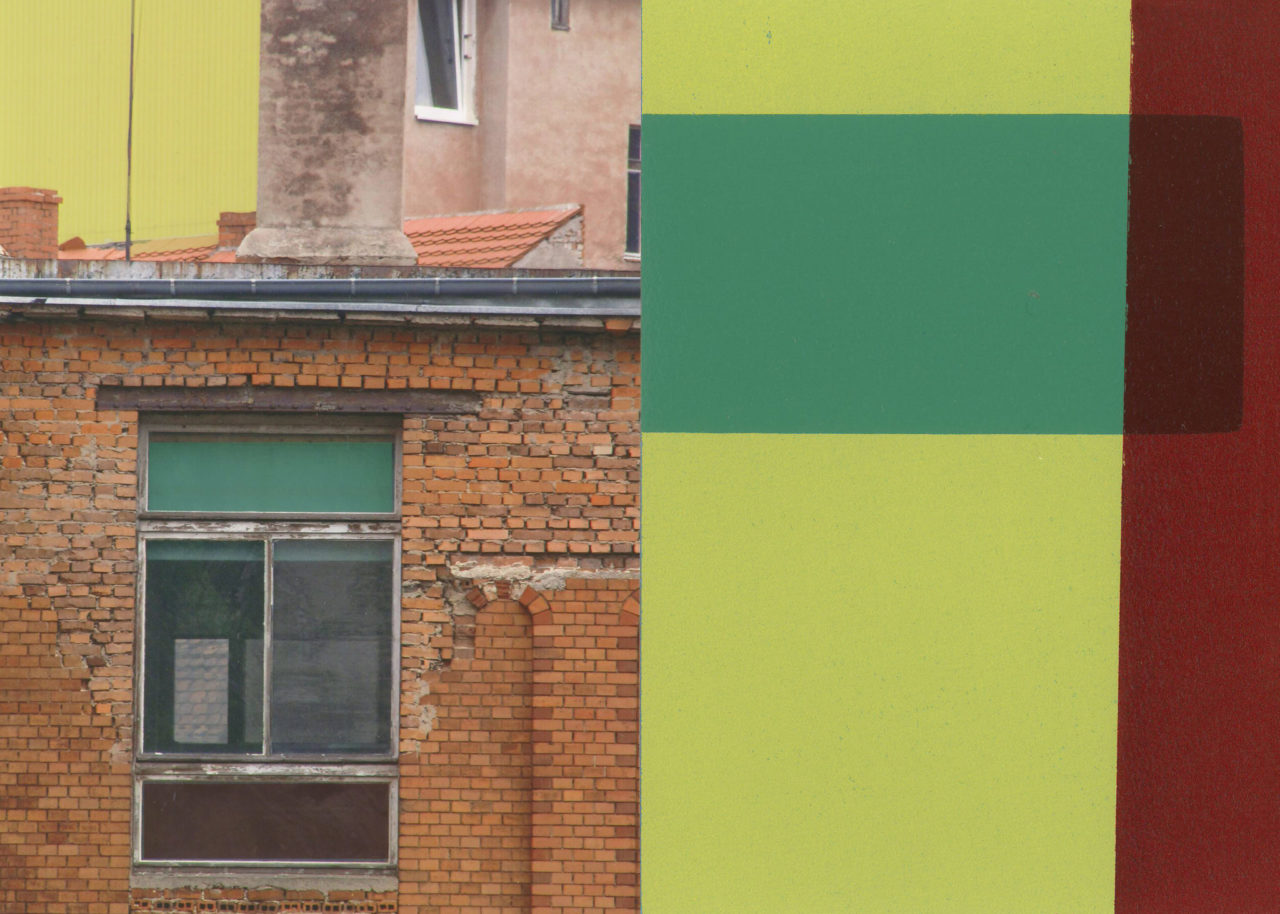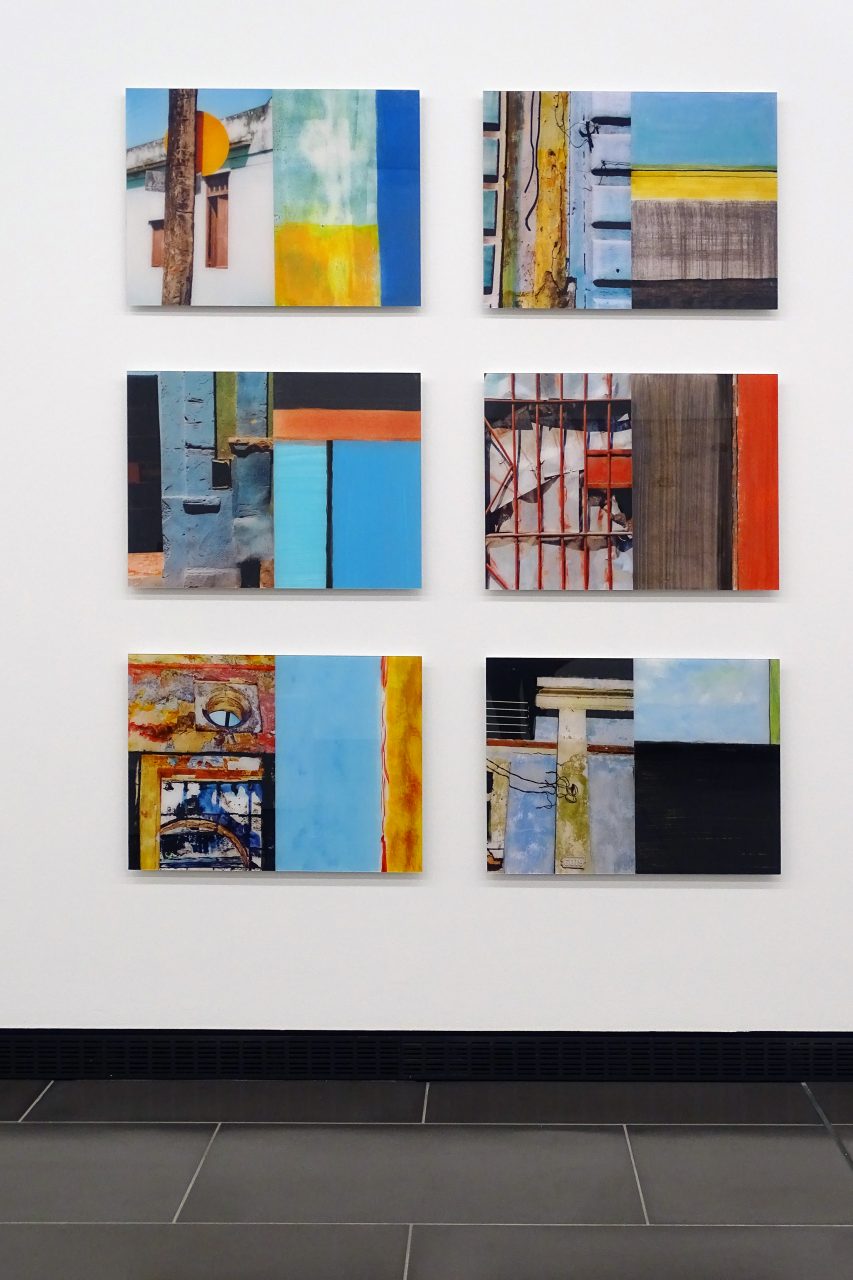
Maria Maier wants her serial work of recent years to be understood as reflection and meditation, a judgment accurate in several ways, because apart from the inspiration taken from journeys and new impressions in distant lands, her works are free, context-independent explorations of structure, color, and space. As in every form of deep contemplation, the aim is also to silence thoughts in favor of immediate perception.
Maria Maier’s new photo book is a result of several study residencies in Cuba; in it, the artist, who lives in Regensburg, presents the pictorial yield in her own multi-potent manner.
Cuba is a difficult terrain. Reflections of everyday Cuban life are generally manifested in socially critical reportage or in hopelessly kitschy Caribbean romanticism. Too great is the temptation, apparently, to abandon oneself to the exoticism of the socialist Caribbean and to obediently mirror the cliché in all too interchangeable pictures.
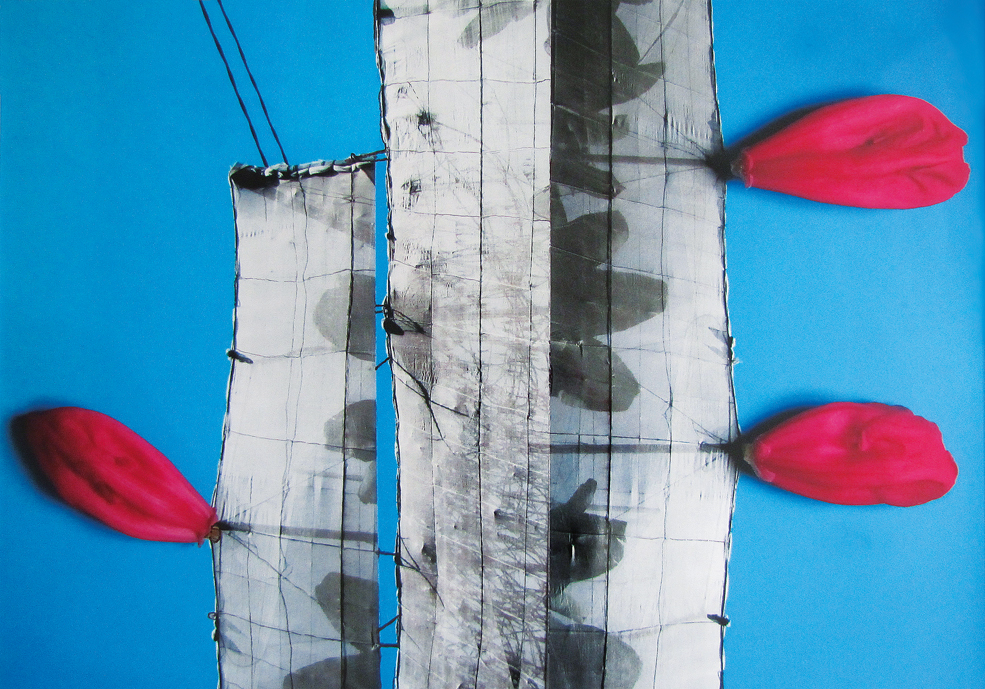
Maria Maier positions her observations in a pleasantly different way. Her Cuba pictures take up the colorfulness, the morbidity, and a certain desolation, but one seeks in vain here for narrative elements or social criticism. Maier’s impressions are, as usual, collages of photography, silkscreen, and painting – a technique that she employs with confident mastery. By overpainting or supplementing with paint, she creates pictures that have an abstract effect and yet present clearly definable components of reality. In her pictures, Maier did without posing Cubans and concentrated all the more intensely on the formal structures and the conspicuous colorfulness in the streets. Her pictures function solo, and their grouping lends them additional force by underlining the artist’s systematics and compositional security. Inspired by her observations and in correspondence with her collages, she produced in Cuba a collection of painterly pictures that are thoroughly abstractly concerned with two-dimensional compositions. A stimulating exploration of colors and forms.
Maria Maier is a painter, draftswoman, and graphic artist, not a photographer. It is astonishing how her works often recognizably juxtapose painting, drawing, printmaking, photography, collage, reproduction and original, found objects, decided signals, the most basic artistic means of composing, and the use of the most modern technical media.
It appears as if the artist wanted to demonstrate what starting material she, perceiving, shapes. The juxtaposition and overlaying are traceable temporal events. The one does not rule out the other; dualities (polarities, analogies) are simultaneous, just as painting presents a succession in simultaneity. The (over-) drawing as a linear happening dominates and connects through time. The photography is an autonomous material that is always substantively and graphically serially processed, as is also done with drawings or paintings.
Her world-spanning view and her time-transcending access to the starting material interweave the artistic techniques, like the particles of reality, with her interior world. Responding and disclosing oneself, giving form, creating compositions, and opening oneself – these processes remain legible in Maria Maier’s pictures and hone our vision for cycles and surprising networks. The collage is the smoothest principle for this; here it is brought to a new climax as a re-production technique, as recycling.
“The World is Her Studio”
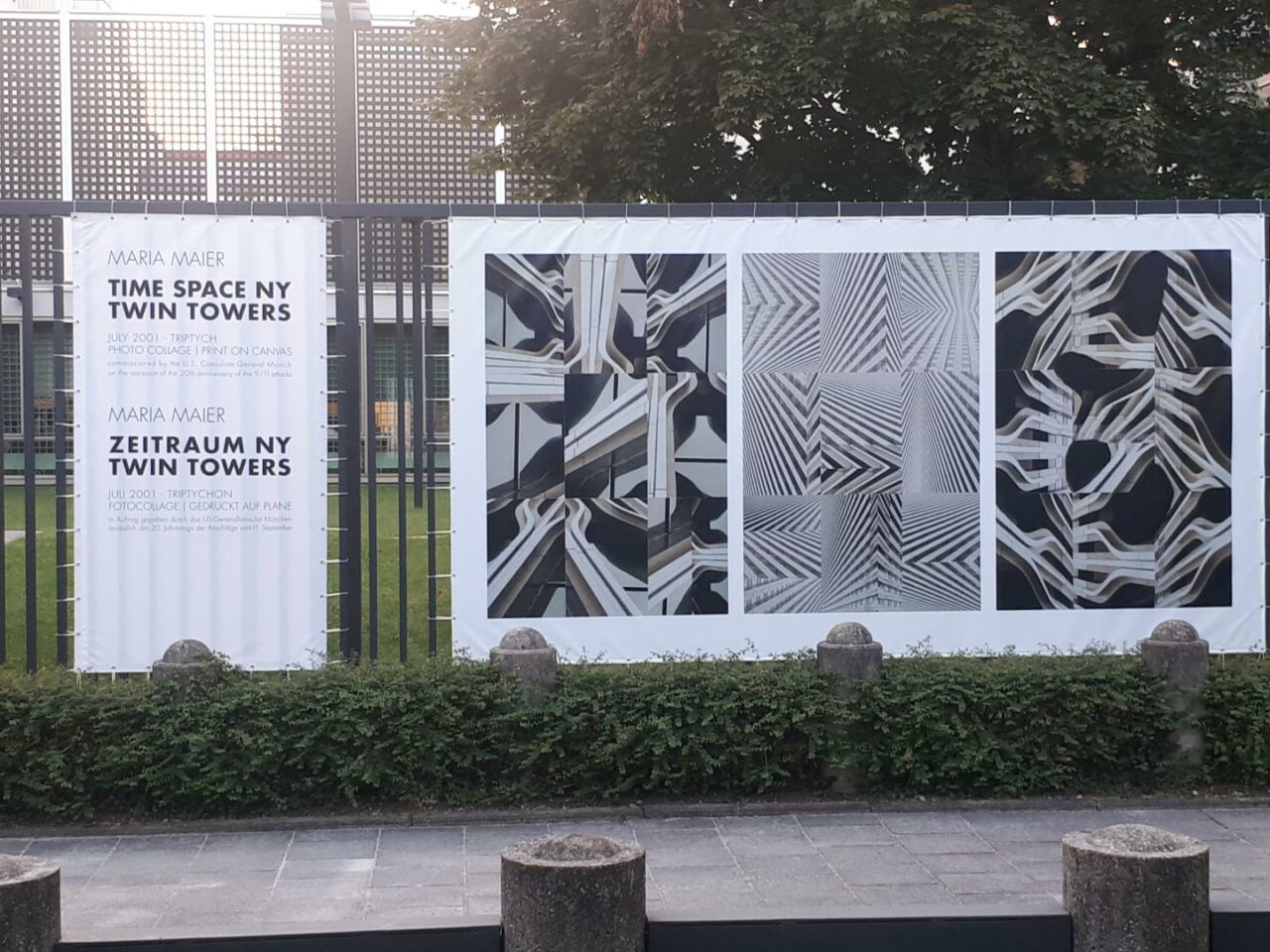
During working residencies and on journeys in foreign countries, Maria Maier uses her camera to trace a photographically precisely defined and yet peculiarly objectless intermediate world that bewilderingly combines the real and the apparent, reality and artificiality. At home, she uses various techniques to process and rework the photographs, always in series, and gives the whole thing a new statement that penetrates into deeper dimensions. Here we are not dealing with pure photography, but with painterly pictures. In her work cycles, one of the themes the artist takes up is transience, the factor time as a societal phenomenon, from her own viewpoint. Her works can be read as serially set up trackings. Maria Maier hunts time, not the spirit of the times.
Maria Maier, the artist from Regensburg, crosses the boundaries between various artistic means of expression. She combines painting, drawing, collage, and photography in a pictorial entirety. The point is calm and motion, time and space. Associative processes condense into an aesthetic whole. The artist has dedicated herself to tracking things down photographically. In her studio at home, the photographic material gathered in alien landscapes and foreign cities is transformed into a many-faceted album of memories and is carried forward in further optical, serial thinking.